2015-12-29

Imagenes del Mundo - Incendios en el Norte de España

Vista general del incendio declarado en el municipio vizcaíno de Berango.
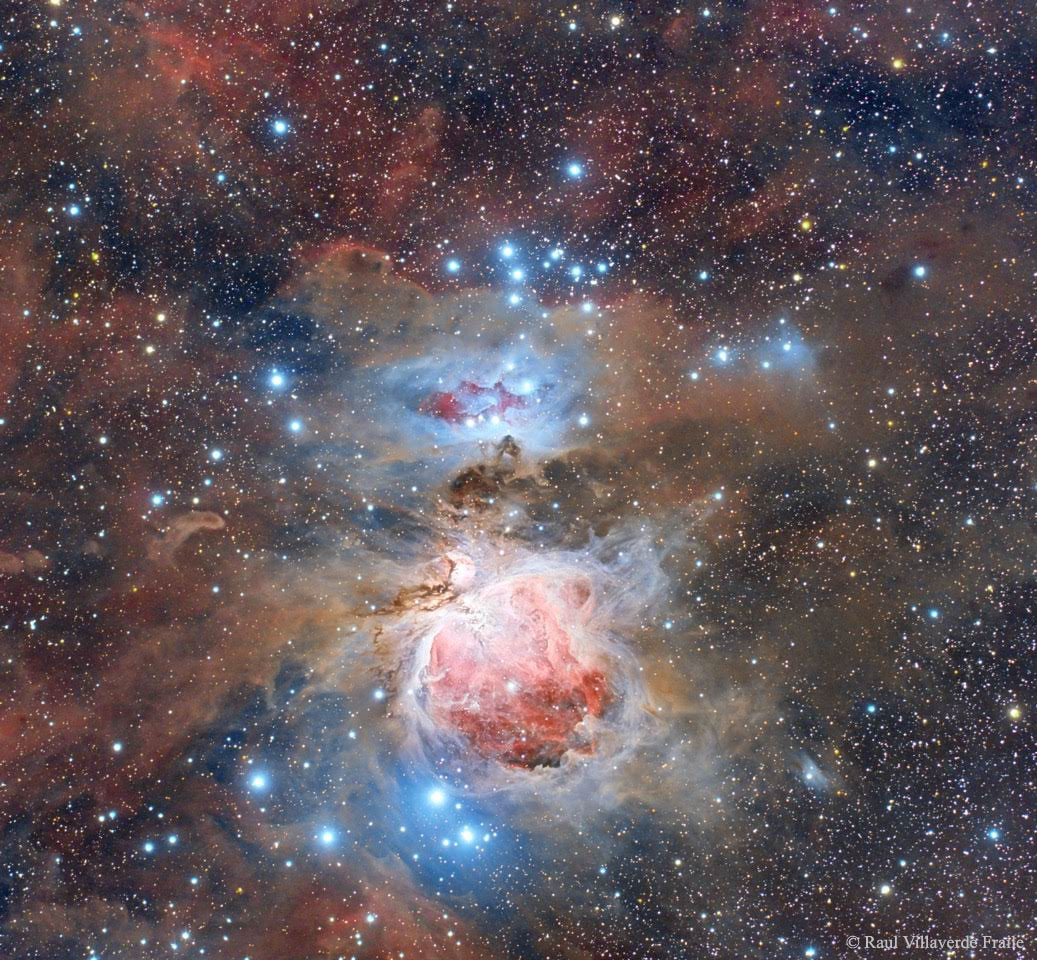
Astronomy picture of the day - 2015 December 29 - Dust of the Orion Nebula

2015 December 29
See Explanation.  Clicking on the picture will download
 the highest resolution version available.
Dust of the Orion Nebula 
Image Credit & Copyright: Raul Villaverde Fraile
Explanation: What surrounds a hotbed of star formation? In the case of the Orion Nebula -- dust. The entire Orion field, located about 1600 light years away, is inundated with intricate and picturesque filaments of dust. Opaque to visible light, dust is created in the outer atmosphere of massive cool stars and expelled by a strong outer wind of particles. The Trapezium and other forming star clusters are embedded in the nebula. The intricate filaments of dust surrounding M42 and M43 appear brown in the featured image, while central glowing gas is highlighted in red. Over the next few million years much of Orion's dust will be slowly destroyed by the very stars now being formed, or dispersed into the Galaxy.

2015-12-28

Imagens do Mundo - Tornados en Texas

En el norte de Texas, tornados de gran intensidad dejaron al menos 11 personas muertas y decenas desplazadas en refugios.

Ataque de tubarão nas Canarias


Turista atacada por tubarão nas Canárias


Uma turista foi atacada por um tubarão, no dia de natal, nas Canárias, uma região autónoma de Espanha. Cristina Ojeda-Thies sobreviveu ao incidente e ficou apenas com ferimentos ligeiros. 

A mulher de 38 anos vive em Madrid, mas estava nas Canárias de férias com a família. O ataque, raro na região, em especial nesta altura do ano, deu-se a apenas 18 metros da costa da Praia Arinaga, popular entre aqueles que gostam de fazer mergulho. 
 

“Tive um encontro cara a cara com um tubarão. Coisas que acontecem quando se nada nas Canárias, em dezembro”, contou, citada pelo The Telegraph. “Notei algo a puxar o meu braço esquerdo, mas não prestei atenção porque senti como se fosse um cão quando morde na brincadeira”.


A turista garantiu ainda que a mordida não doeu, como seria de esperar, e que só se apercebeu da situação quando viu o animal debaixo de água. 
 

“Voltei à costa a nadar crawl, mas senti outro puxão, mais intenso desta vez. Meio segundo depois senti algo a agarrar-me. Virei-me e vi-o puxar-me. Era um peixe. Bati-lhe com a minha mão direita e vi as barbatanas do tubarão, enquanto fugia. Tudo aconteceu muito rápido, em segundos. Apesar de não ter sido um ataque doloroso, não me apercebi do quão grave era até sair da água”.
“Houve vezes em que caí da bicicleta ou que me queimei enquanto cozinhava que doeram mais”.
Cristina Ojeda-Thies conseguiu escapar apenas com ferimentos ligeiros. A turista partilhou algumas fotos da dentada no Twitter. 

TVI24 - Portugal

Playing For Change - "A change is gonna come" - Video - Music - Live

Afficher l'image d'origine
"A change is gonna come"

Astronomy picture of the day - 2015 December 28 - Falcon 9 First Stage Landing

Falcon 9 First Stage Landing 
Video Credit: SpaceX
Explanation: The booster has landed. Spaceflight took a step toward the less expensive last week when the first stage of a Falcon 9 rocket set down on a landing pad not far from its Florida launch. Previously, most rocket stages remained unrecovered -- with the significant exception of the Space Shuttles landing on a runway and their solid rocket boosters being fished back from the sea. The landing occurred while the Falcon 9 second stage continued up to launch several communications satellites into low Earth orbit. The controlled landing, produced by SpaceX, was the first of its kind, but followed a booster landing last month by Blue Origin that did not involve launching satellites. Boeingand SpaceX were selected last year by NASA to launch future astronauts to the International Space Station. The pictured rocket booster will be analyzed for wear and reusability, but then is scheduled to be retired.

2015-12-27

Fotos - "Oceano Atlântico" - 25-12-2015

"Oceano Atlântico"

25 de dezembro de 2015
JoanMira

Astronomy picture of the day - 2015 December 27 - Doomed Star Eta Carinae

See Explanation.  Clicking on the picture will download
 the highest resolution version available.
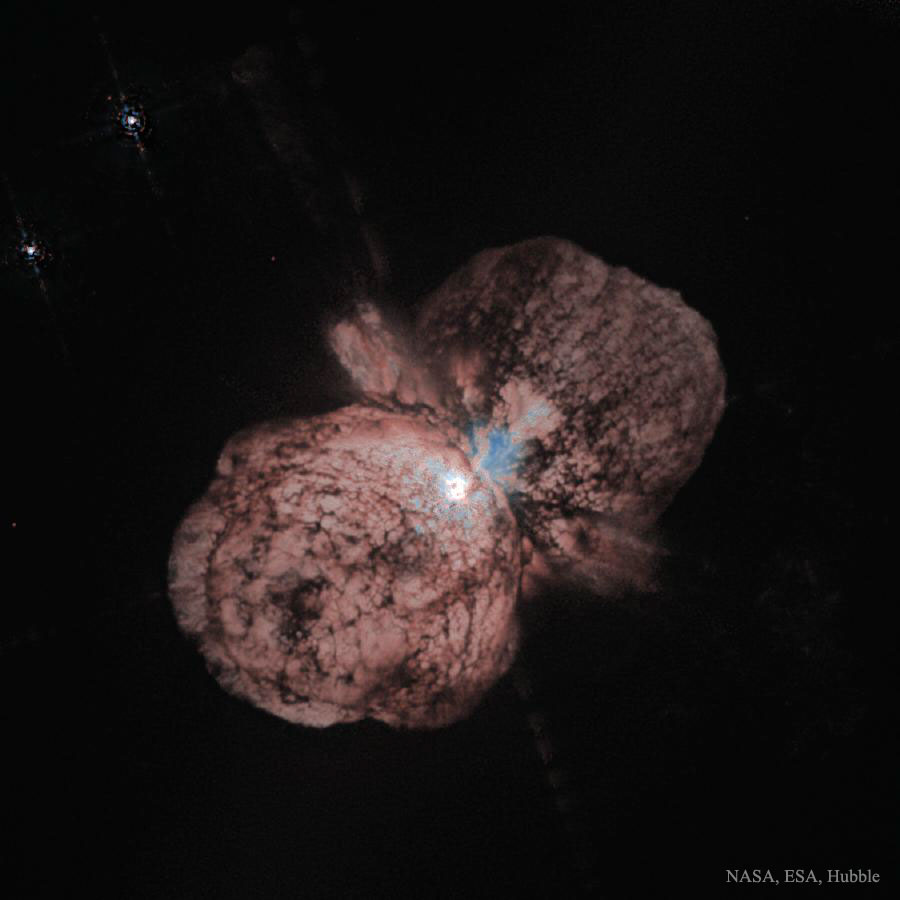
Doomed Star Eta Carinae 
Image Credit: J. Morse (Arizona State U.), K. Davidson (U. Minnesota) et al., WFPC2HSTNASA
Explanation: Eta Carinae may be about to explode. But no one knows when - it may be next year, it may be one million years from now. Eta Carinae's mass - about 100 times greater than our Sun - makes it an excellent candidate for a full blown supernova. Historical records do show that about 150 years ago Eta Carinae underwent an unusual outburst that made it one of the brightest stars in the southern skyEta Carinae, in the Keyhole Nebula, is the only starcurrently thought to emit natural LASER light. This featured image, taken in 1996, brought out new details in the unusual nebula that surrounds this rogue star. Now clearly visible are two distinct lobes, a hot central region, and strange radial streaks. The lobes are filled with lanes of gas and dust which absorb the blue and ultraviolet light emitted near the center. The streaks remain unexplained.

2015-12-26

R.E.M. - "Everybody hurts" - Video - Music - Live

"Everybody hurts"

Astronomy picture of the day - 2015 December 26 - Southern Craters and Galaxies

See Explanation.  Clicking on the picture will download
 the highest resolution version available.
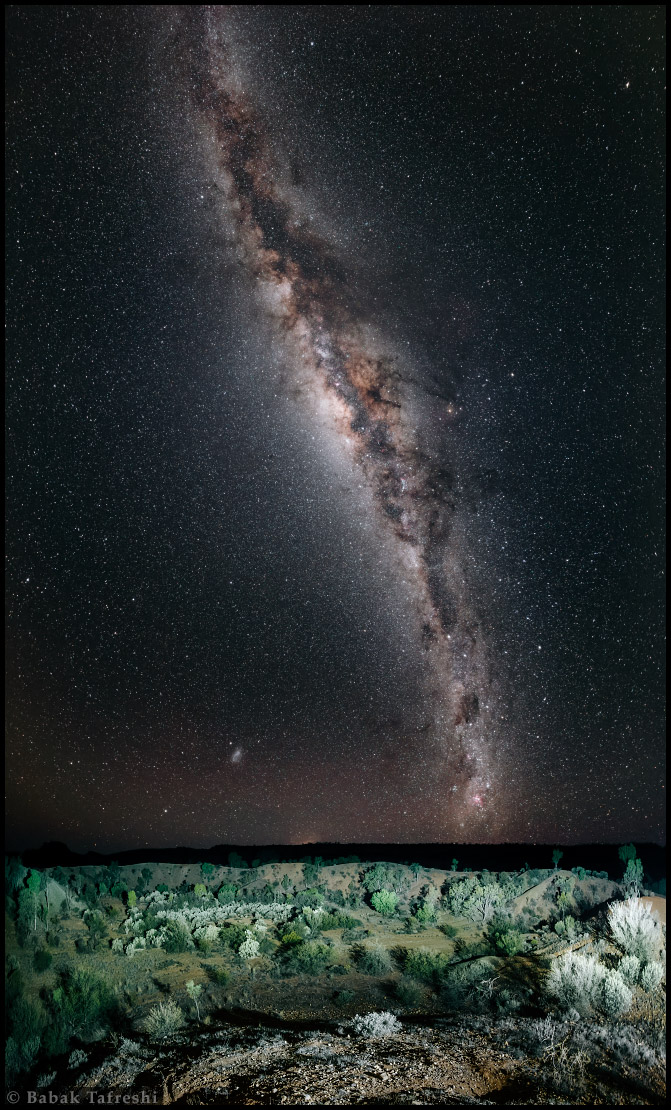
Southern Craters and Galaxies 
Image Credit & Copyright: Babak Tafreshi (TWAN)
Explanation: The Henbury craters in the Northern Territory, Australia, planet Earth, are the scars of an impact over 4,000 years old. When an ancient meteorite fragmented into dozens of pieces, the largest made the 180 meter diameter crater whose weathered walls and floor are lit in the foreground of this southern hemisphere nightscape. The vertical panoramic view follows our magnificent Milky Way galaxy stretching above horizon, its rich central starfields cut by obscuring dust clouds. A glance along the galactic plane also reveals Alpha and Beta Centauri and the stars of the Southern Cross. Captured in the region's spectacular, dark skies, the Small Magellanic Cloud, satellite of the Milky Way, is the bright galaxy to the left. Not the lights of a nearby town, the visible glow on the horizon below it is the Large Magellanic Cloud rising.