2016-01-11

Texto - Inicio de Ano Novo mortifero

Quando chega o final do Ano Velho, à meia-noite e um segundo, trocam-se votos de alegria, felicidade e que o novo Ano traga para todos muita saúde e felicidade. Assim costuma ser.

Como é habitual também, a esperança pode tornar-se rapidamente em desespero ao constatar que o Ano vindouro não mais é que a continuidade, muitas vezes olvidada, dos tempos passados.

Não se espante; a artificialidade existe nas mentes daqueles que depois dos votos voltam à rotina. O futuro, felizmente, não existe por si só. O futuro “é” ou antes, “será”. E felicidade, nele esperada depende, em grande parte,  da actuação dos seres que nele vivem…

Mas é verdade que o conceito de felicidade não deixa de ser muito subjectivo.

O que é para si a felicidade? Para muitos é ter saúde, ter filhos e netos que o amam, meios materiais de subsistência, ter um telhado…, para outros é ter amores, amigos, realizar-se na esfera profissional e nunca esquecer de festejar qualquer evento em ambiente efusivo e de grande alegria, conquanto seja artificial.

Neste Ano novo, que se queria esperançoso, é inacreditável o numero de pessoas mediaticamente conhecidas que foram para o “Outro Mundo”; é sempre triste separar-mo-nos daqueles artistas que acompanharam a nossa infância e juventude…

Mas mais penoso é perdermos um Familiar ou um Amigo.

Aconteceu-me, foi no Rio de Janeiro.

Saudade eterna para o Amaury Bitetti. Descansa em paz.

11-01-2016


JoanMira 

David Bowie - "Lazarus" - Video - Music

    Afficher l'image d'origine
    David Bowie foi um cantor, compositor, ator e produtor musical inglês. Por vezes referido como "Camaleão do Rock" pela capacidade de sempre renovar sua imagem, tem sido uma importante figura na música ... Wikipédia
    Falecimento: 10 de janeiro de 2016, Manhattan, Nova Iorque, EUA
    Cônjuge: Iman (desde 1992), Angela Bowie (de 1970 a 1980)
Afficher l'image d'origine
"Lazarus"

Astronomy picture of the day - 2016 January 11 - A Colorful Solar Corona over the Himalayas

See Explanation.  Clicking on the picture will download
 the highest resolution version available.
A Colorful Solar Corona over the Himalayas 
Image Credit & Copyright: Jeff Dai
Explanation: What are those colorful rings around the Sun? A corona visible only to Earth observers in the right place at the right time. Rings like this will sometimes appear when the Sun or Moon is seen through thin clouds. The effect is created by the quantum mechanical diffraction of light around individual, similarly-sized water droplets in an intervening but mostly-transparent cloud. Since light of different colors has different wavelengths, each color diffracts differently. Solar Coronae are one of the few quantum color effects that can be easily seen with the unaided eye. This type of solar corona is a visual effect due to water in Earth's atmosphere and is altogether different from the solar corona that exists continually around the Sun -- and stands out during a total solar eclipse. In the foreground is the famous Himalayan mountain peak Ama Dablam (Mother's Necklace),

2016-01-09

Imagens do Mundo - Vulcão Soputan - Indonésia - 09-01-2016


El volcán Soputan arroja cenizas durante una erupción en la isla de Célebes, en Indonesia.

Imagens do Mundo - Avdiivka - Ucrânia - 09-01-2016


Ventana daña por fuego de artilleria en la ciudad ucraniana de Avdiivka.

Imagens do Mundo - Nova Delhi - 09-01-2016

Una bandada de pájaros sobrevuela Nueva Delhi (India) en un día de alta contaminación.


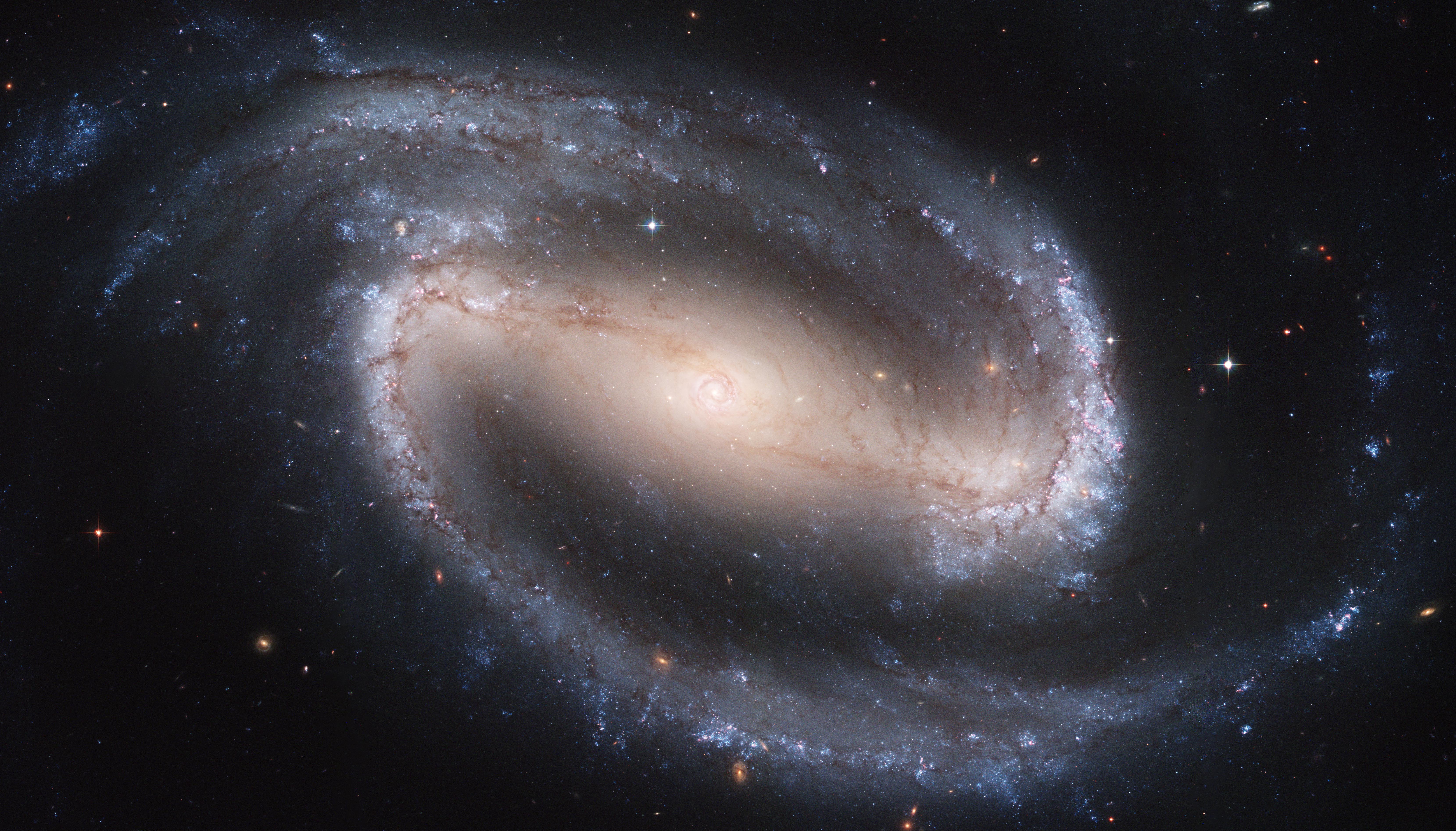
Astronomy Picture of the Day - 2016 January 9 - Barred Spiral Galaxy NGC 1300

See Explanation.  Clicking on the picture will download
 the highest resolution version available.

Barred Spiral Galaxy NGC 1300 
Image Credit: Hubble Heritage TeamESANASA
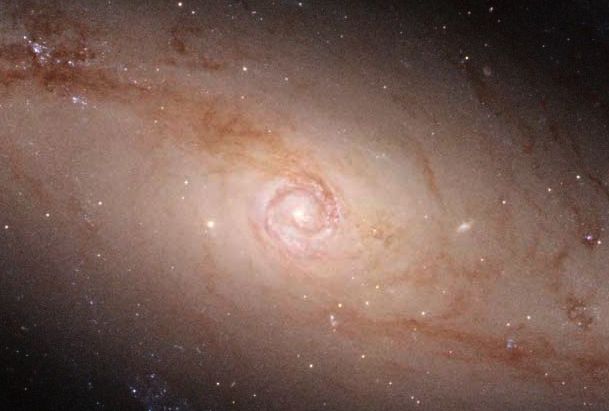
Explanation: Big, beautiful, barred spiral galaxy NGC 1300 lies some 70 million light-years away on the banks of the constellation Eridanus. This Hubble Space Telescope composite view of the gorgeous island universe is one of thelargest Hubble images ever made of a complete galaxy. NGC 1300 spans over 100,000 light-years and the Hubble image reveals striking details of the galaxy's dominant central bar and majestic spiral arms. In fact, on close inspectionthe nucleus of this classic barred spiral itself shows a remarkable region of spiral structure about 3,000 light-years across. Like other spiral galaxies, including our own Milky Way, NGC 1300 is thought to have a supermassive central black hole.


Las 10 razas de perros más raras del mundo - 10) Mastin tibetano


En marzo de este 2015, un magnate chino pagó dos millones de dólares por un ejemplar de esta raza y lo convirtió en el perro más caro del mundo. Se consolidó como un símbolo de estatus por su imponente presencia, muy similar a los leones.

2016-01-08

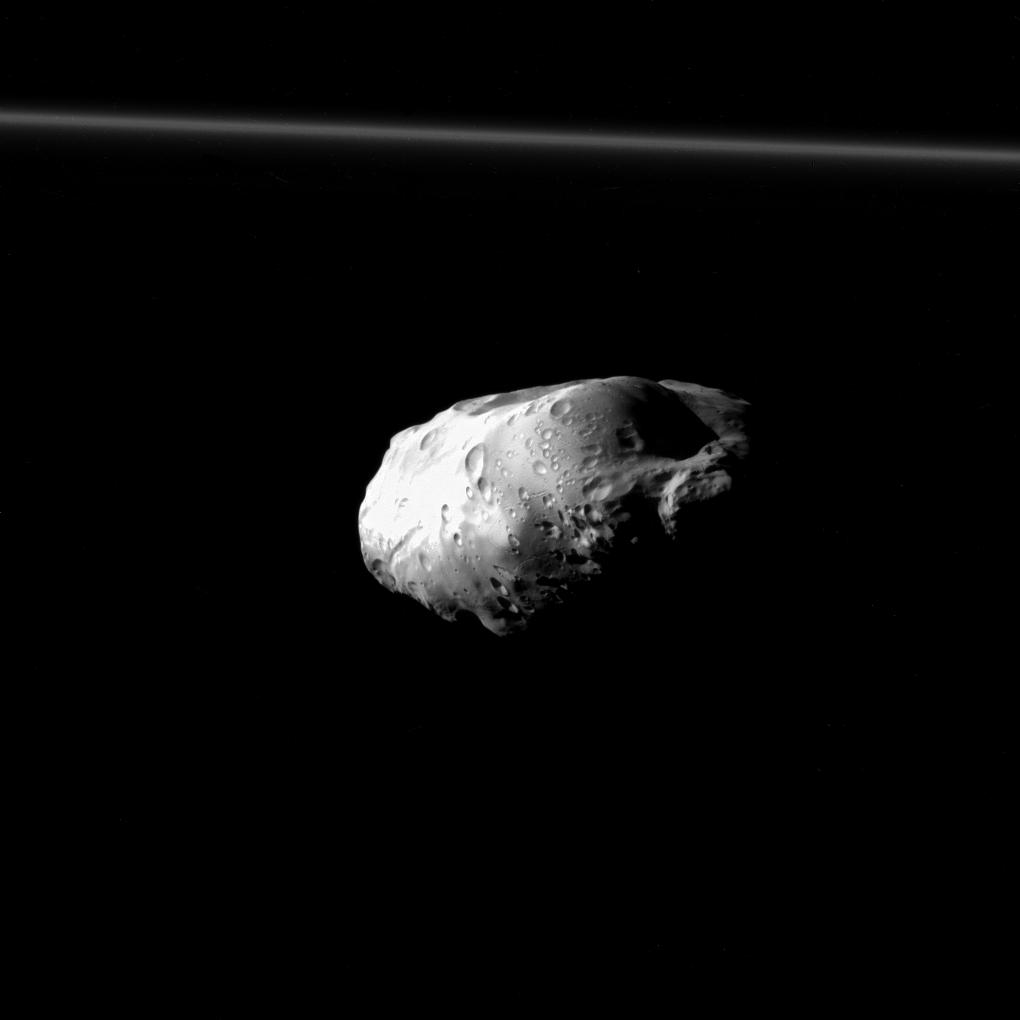
Astronomy Picture of the Day - 2016 January 8 - Prometheus and the F Ring

See Explanation.  Clicking on the picture will download
 the highest resolution version available.
Prometheus and the F Ring 
Image Credit: Cassini Imaging TeamSSIJPLESANASA
Explanation: In Greek myth Prometheus was a Titan, known for bringing fire from Mount Olympus. But in modern times the name is given to a small moon of Saturn, orbiting just inside Saturn's F ring. In a complex interaction, the tinypotato-shaped moon interacts with the icy ring particles creating structures along the F ring still not fully understood. One of the highest resolution views of Prometheus, this image of its pocked surface posing with the thin F ring in the background was taken during the Cassini spacecraft's close approach on December 6, 2015. Prometheus is about 86 kilometers (50 miles) across.

2016-01-07

Astronomy picture of the day - 2016 January 7 - High Energy Andromeda

See Explanation.  Clicking on the picture will download
 the highest resolution version available.
High Energy Andromeda 
Image Credit: NASA, JPL-Caltech, GSFC, NuSTARGALEX,
Explanation: A mere 2.5 million light-years away, the Andromeda Galaxy, also known as M31, really is just next door as large galaxies go. In this (inset) scan, image data from NASA's Nuclear Spectrosopic Telescope Array has yielded the best high-energy X-ray view yet of our large neighboring spiral, revealing some 40 extreme sources of X-rays, X-ray binary star systems that contain a black hole or neutron star orbiting a more normal stellar companion. In fact, larger Andromeda and our own Milky Way are the most massive members of the local galaxy group. Andromeda is close enough that NuSTAR can examine its population of X-ray binaries in detail, comparing them to our own.The background image of Andromeda was taken by NASA's Galaxy Evolution Explorer in energetic ultraviolet light.