Na rua de Santa Catarina encontra-se o famoso Café Majestic, considerado um dos mais bonitos do mundo. Não deixe de entrar para ao menos...um café. E muitas fotografias...
Pelo menos duas explosões fizeram-se sentir na Manchester Arena, em Inglaterra, onde a cantora norte-americana Ariana Grande estava a dar um concerto. A polícia informou ao início da manhã desta terça-feira que o número de mortos subiu para 22. Entre as vítimas há crianças.
O incidente terá ocorrido perto das 22.30 locais (mesma hora em Portugal), logo depois de milhares de pessoas que assistiam ao concerto terem referido ter ouvido um "estrondo muito grande". Já posteriormente a polícia de Manchester disse que este acontecimento está agora a ser tratado como um "incidente terrorista".
Hoje de manhã, o comandante da polícia de Manchester, no Reino Unido, acrescentou que 59 feridos estão a ser tratados em oito hospitais diferentes da região.
Num balanço sobre a investigação feito já esta terça-feira, Ian Hopkins adiantou que a polícia acredita que o responsável pela explosão foi um homem apenas, que "transportava um engenho explosivo improvisado, que ele detonou causando esta atrocidade".
A primeira-ministra britânica Theresa May, que decidiu suspender a campanha eleitoral, também confirmou este incidente como um ato terrorista. "Trabalhamos para determinar todo os detalhes do que está a ser investigado pela polícia como um horrível atentado terrorista", disse a primeira-ministra que convocou uma reunião do gabinete de segurança.
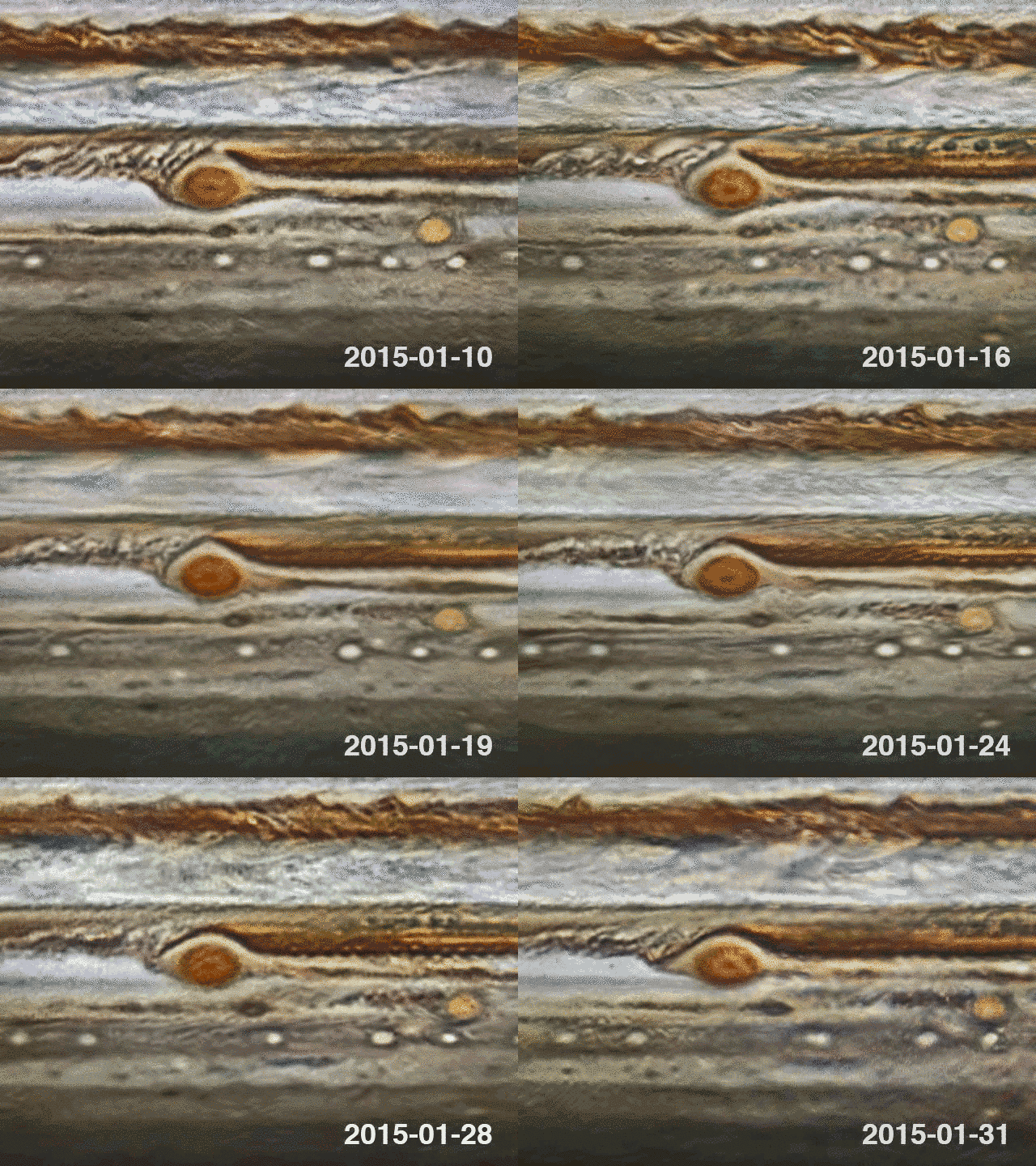
Explanation: What would it look like to approach Jupiter? To help answer this, a team of 91 amateur astrophotographers took over 1,000 pictures of Jupiter from the Earth with the resulting images aligned and digitally merged into the featured time-lapse video. Image taking began in 2014 December and lasted just over three months. The resulting fictitious approach sequence has similarities to what was seen by NASA's robotic Juno spacecraft as it first approachedthe Jovian world last July. The video begins with Jupiter appearing as a small orb near the image center. As Jupiter nears from below, the planet looms ever larger while the rotation of its cloud bands becomes apparent. Jupiter'sshrinking Great Red Spot rotates into view twice, at times showing unusualactivity. Many white ovals are visible moving around the giant planet. The video ends as the imaginary spacecraft passes over Jupiter's North Pole.
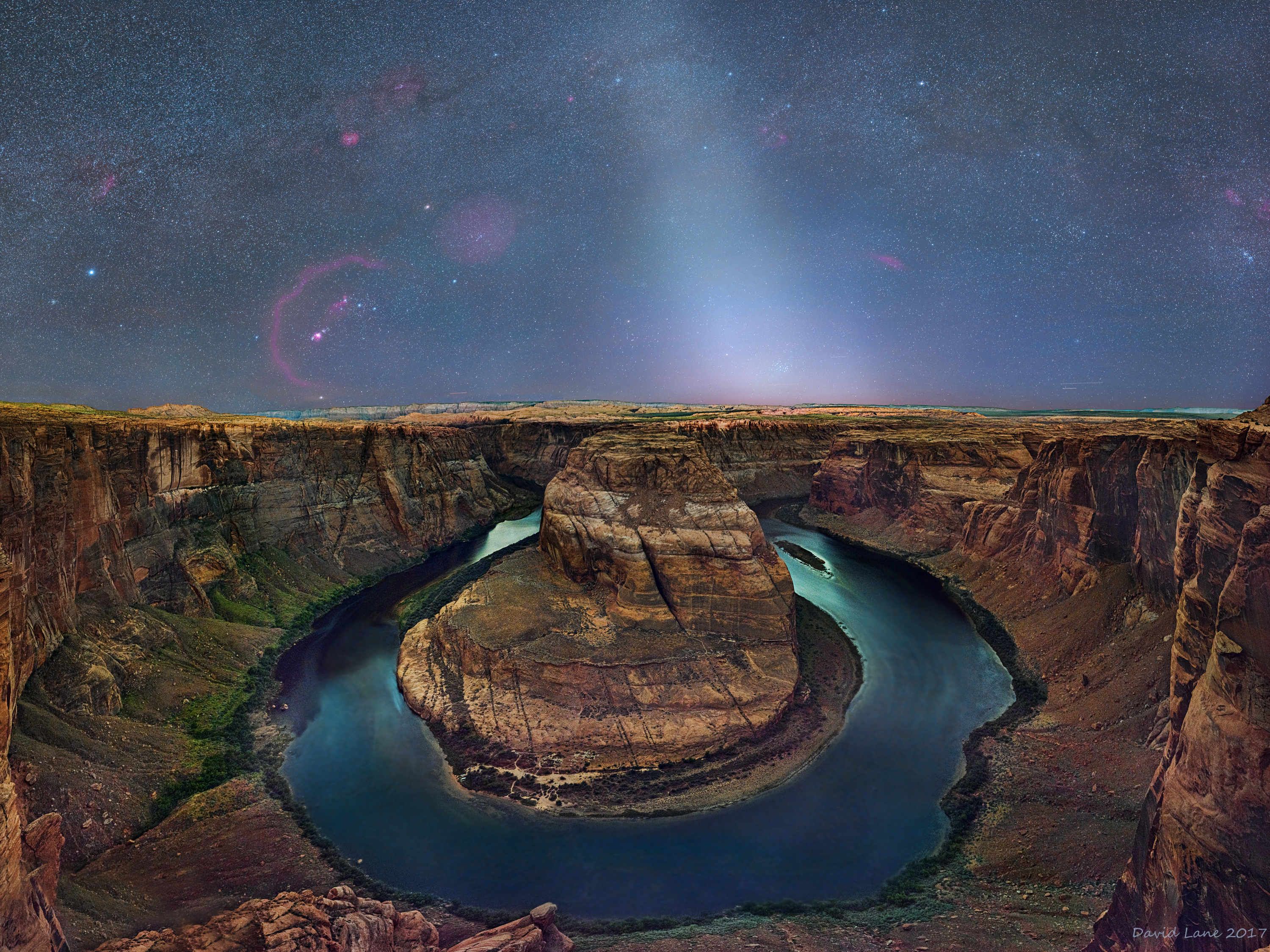
A Zodiacal Sky over Horseshoe Bend Image Credit & Copyright: David Lane
Explanation: What's causing the unusual ray of white light extending upward from the central horizon? Dust orbiting the Sun. At certain times of the year, a band of sun-reflecting dust from the inner Solar System rises prominently before sunrise and is called zodiacal light. The dust originates mostly from faint Jupiter-family comets and slowly spirals into the Sun. Pictured, in front of the zodiacal light, is a spectacular view of Horseshoe Bend of the Colorado River. Emitted from well behind the zodiacal light is a spectacular sky that includes many bright stars including Sirius, several blue star clusters including the Pleiades, and an assortment of red nebula including Barnard's Loop in Orion. The 30-image composite was taken earlier this month in nearly complete darkness only six inches from the edge of a dangerous cliff.
La DCNS, groupe industriel français spécialisé dans le naval militaire, assure au JDDavoir "respecté les règles de droit". Pourtant, la justice a lancé une enquête. Le Parquet national financier cherche en effet à savoir si la vente de cinq sous-marins par la France au Brésil en 2008 a donné lieu au versement de pots-de-vin. Quatre magistrats, dont la chef du PNF, Eliane Houlete, se sont rendus la semaine dernière au Brésil officiellement pour "renforcer la coopération judiciaire" entre les deux pays. Mais selon nos informations, ils ont aussi tenu de discrètes réunions de travail avec des enquêteurs brésiliens sur un grand dossier de corruption qui ébranle le pays, issu du tentaculaire scandale Petrobras.
En 2008, la France, via la DCNS, vend cinq sous-marins, dont un à propulsion nucléaire, au Brésil. Le tout pour un montant de 6,7 milliards d'euros. L'entreprise française DCNS a-t-elle ou non été liée à de quelconques surfacturations ou à des versements de fonds? A-t-elle pu ignorer les pratiques de son partenaire local, Odebrecht, dont plus de 70 cadres sont impliqués dans des affaires de dessous-de-table? Les vérifications lancées par le PNF vont tenter d'y voir clair.
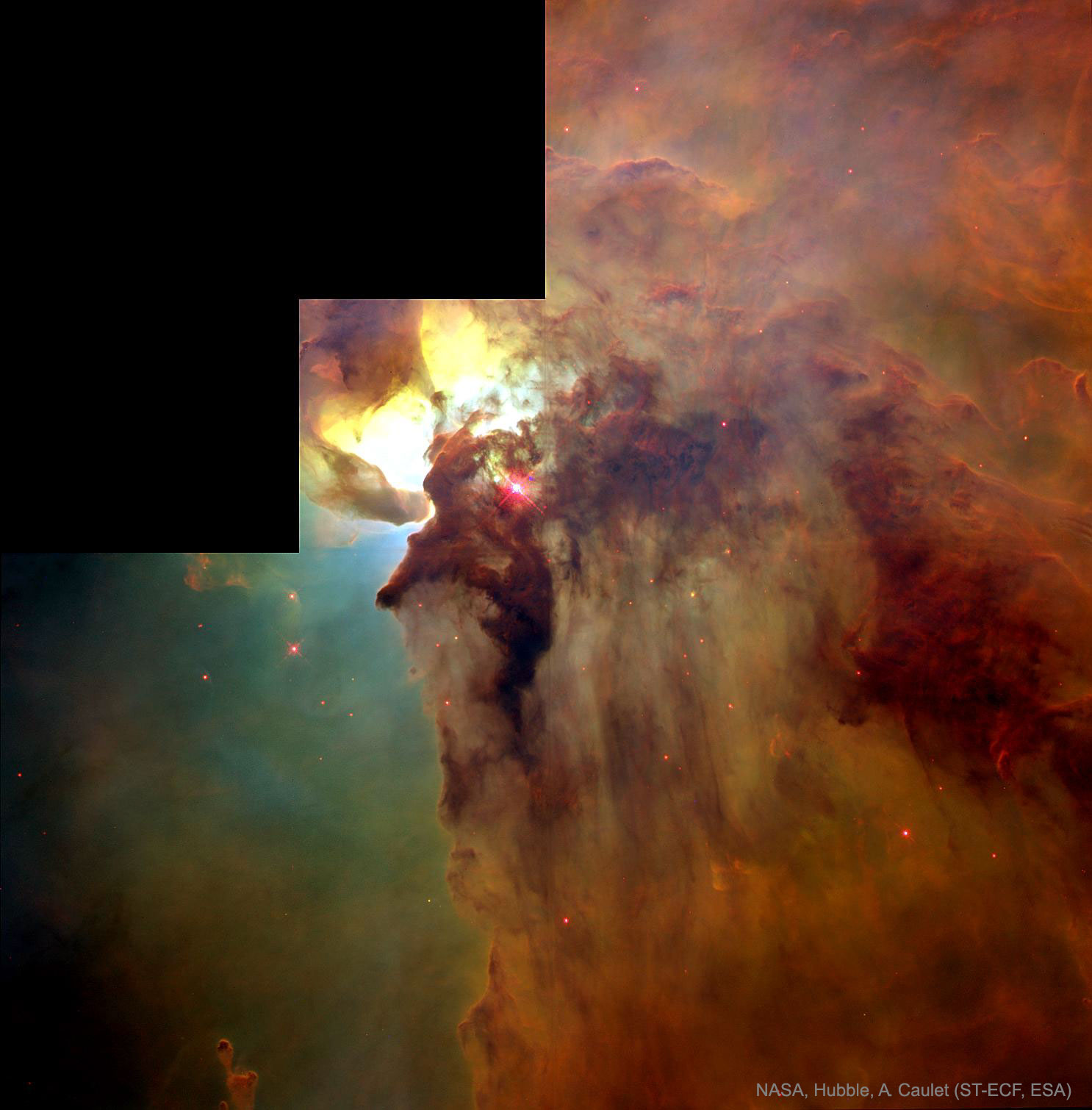
In the Center of the Lagoon Nebula Image Credit: Hubble, A. Caulet (ST-ECF, ESA), NASA
Explanation: The center of the Lagoon Nebula is a whirlwind of spectacular star formation. Visible on the lower left, at least two long funnel-shaped clouds, each roughly half a light-year long, have been formed by extreme stellar winds and intense energetic starlight. The tremendously bright nearby star, Hershel 36, lights the area. Vast walls of dust hide and redden other hot young stars. As energy from these stars pours into the cool dust and gas, large temperature differences in adjoining regions can be created generating shearing winds which may cause the funnels. This picture, spanning about 5 light years, was taken in 1995 by the orbiting Hubble Space Telescope. The Lagoon Nebula, also known as M8, lies about 5000 light years distant toward the constellation of Sagittarius.
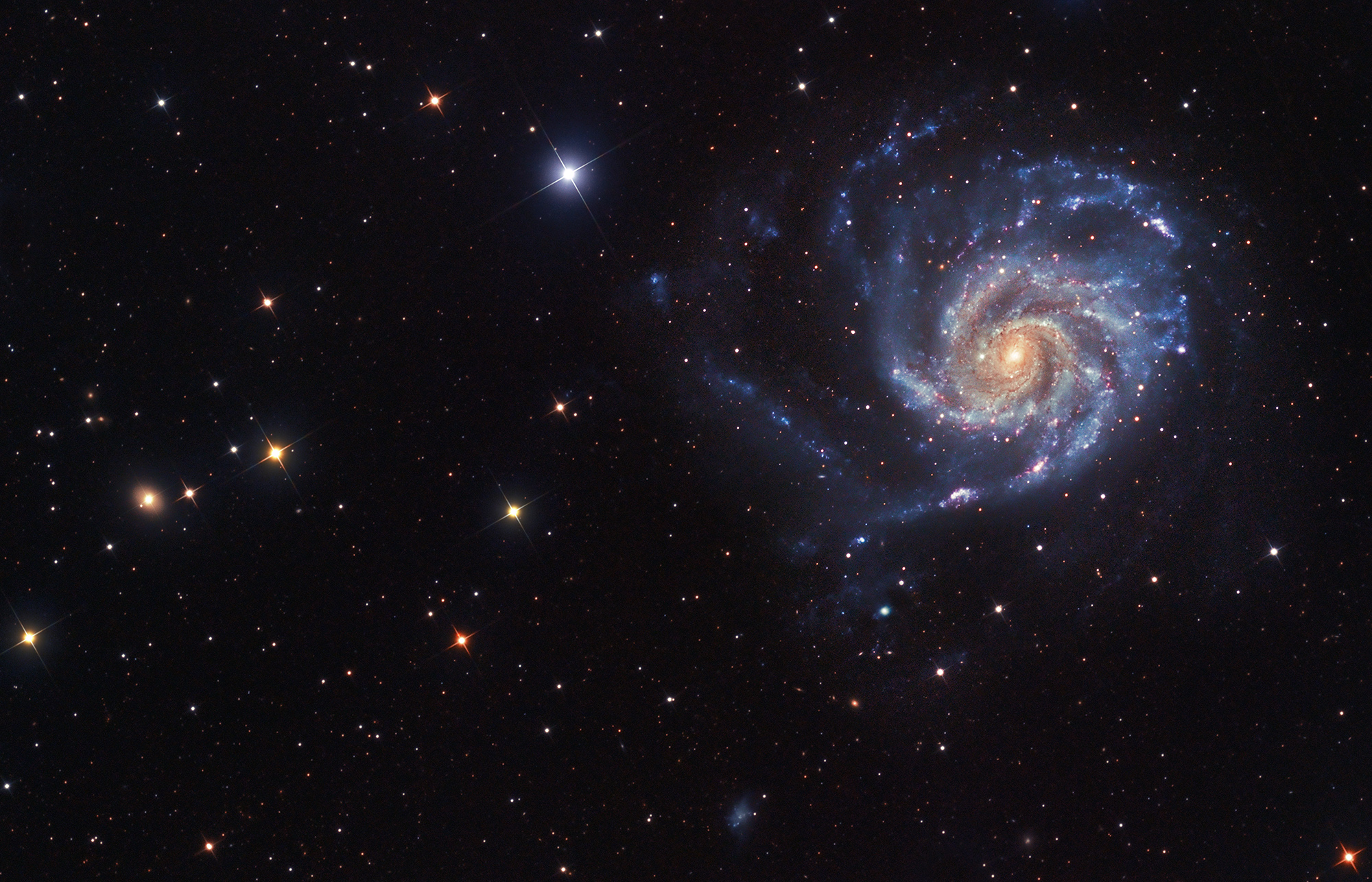
Explanation: Big, beautiful spiral galaxy M101 is one of the last entries in Charles Messier's famous catalog, but definitely not one of the least. About 170,000 light-years across, this galaxy is enormous, almost twice the size of our own Milky Way galaxy. M101 was also one of the original spiral nebulae observed by Lord Rosse's large 19th century telescope, the Leviathan of Parsontown. M101 shares this modern telescopic field of view with spiky foreground stars within the Milky Way, and more distant background galaxies. The colors of the Milky Way stars can also be found in the starlight from the large island universe. Its core is dominated by light from cool yellowish stars. Along its grand spiral arms are the blue colors of hotter, young stars mixed with obscuring dust lanes and pinkish star forming regions. Also known as the Pinwheel Galaxy, M101 lies within the boundaries of the northern constellation Ursa Major, about 25 million light-years away.