2015-12-14
Las 10 razas de perros más raras del mundo - 9) Puli
Es el perro nacional de Hungría. Sin dudas lo más característico de esta raza es el pelo, muy abundante y con un efecto simpático: tiene unos rizos tan perfectos que parecen rastas.
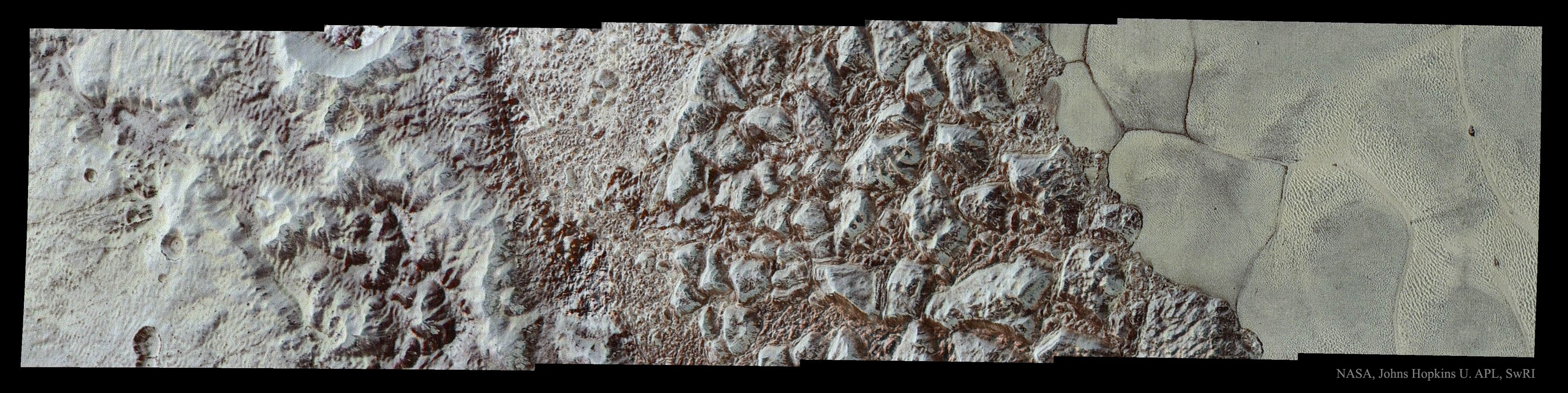
Astronomy picture of the day - 2015 December 14 - Pluto: From Mountains to Plains
Image Credit: NASA, Johns Hopkins U. APL, SwRI
Explanation: What do the sharpest views ever of Pluto show? As the robotic New Horizons spacecraft moves into the outer Solar System, it is now sending back some of the highest resolution images from its historic encounter withPluto in July. Featured here is one recently-received, high-resolution image. On the left is al-Idrisi Montes, mountainous highlands thought composed primarily of blocks of solid nitrogen. A sharp transitional shoreline leads to the ice plains, on the right, that compose part of the heart-shaped feature known as Sputnik Planum. Why the plains are textured with ice pits and segmented is currently unknown. The image was taken about 15 minutes before closest approach and shows an area about 30 kilometers across. The New Horizons spacecraft is next scheduled to fly past Kuiper Belt object 2014 MU 69 on New Year's Day 2019.
Texto - Eleições Regionais em Franca – 13-12-2015
Parece que até a €uropa suspirou de alivio
depois de o partido de extrema direita “Front National” não ter concretizado a esperança
provocada pela estrondosa vitoria da passada semana; contrariamente ao que
alguns analistas políticos apregoam, o partido de Marine Le Pen não saiu derrotado “em toda a linha” da segunda volta
das “Regionais”.
A derrota que muitos dizem ser não o é! O FN
constitui, hoje, uma forca politica legitima, não obstante um sistema de votação que o desfavorece
de forma descarada!
Como explicar que um partido que reúne um terço
dos eleitores votantes, não vença numa Região sequer?
A resposta encontra-se por um lado na Constituição
francesa que atribui um bónus de 25% ao partido tendo chegado em primeiro
lugar!
A resposta provem, também, da aliança entre esquerda
e direita que tudo fizeram para chegar a contas que permitissem poder conservar
os lugares onde desde sempre se encontram instalados, com episódicas alternâncias
e vice-versa!!!
Mais; este outro facto que passa a ser importante:
doravante em Franca, o tradicional bipartidarismo passou para uma trilogia onde “le nouveau-venu” não pode mais deixar de ser ignorado.
Chame-se derrota ao facto do “Front National” não
ter obtido os resultados que esperava…mas, simultaneamente, reconheça-se a
progressão exponencial daquele partido cujos adversários, da esquerda à direita, continuam
a apelidar de antidemocrático!
Como é? Aquele “ignóbil” partido fascista tem
ou não tem assento na “Assemblée Nationale”? Tem ou não existência legal? Pode
ou não concorrer com outros representantes de ideias antagonicas?
A tudo isto se impõe uma obvia e simples
resposta: SIM!
Aquele partido nunca poderá ser tratado de antidemocrático
porque tem existência legal e é sufragado pelo Povo.
Assumo esta função de advogado do diabo porque
as minhas assumidas e democráticas ideias me não permitem ser censor de quaisquer movimentos populares, sejam partidos xenófobos dos “Lepen” ou populistas do “Portas Abertas”!
Bayonne, 13-12-2015
JoanMira
PS: estou-me absolutamente “borrifando”
para o que pensa (?) a €uropa!
2015-12-13
2015-12-12
Las 10 razas de perros más raras del mundo - 8) Lycaon pictus o “perro hiena”
Se parece mucho a las hienas, aunque con las orejas más redondeadas. Como tiene mucho carácter, es muy difícil de domesticar.
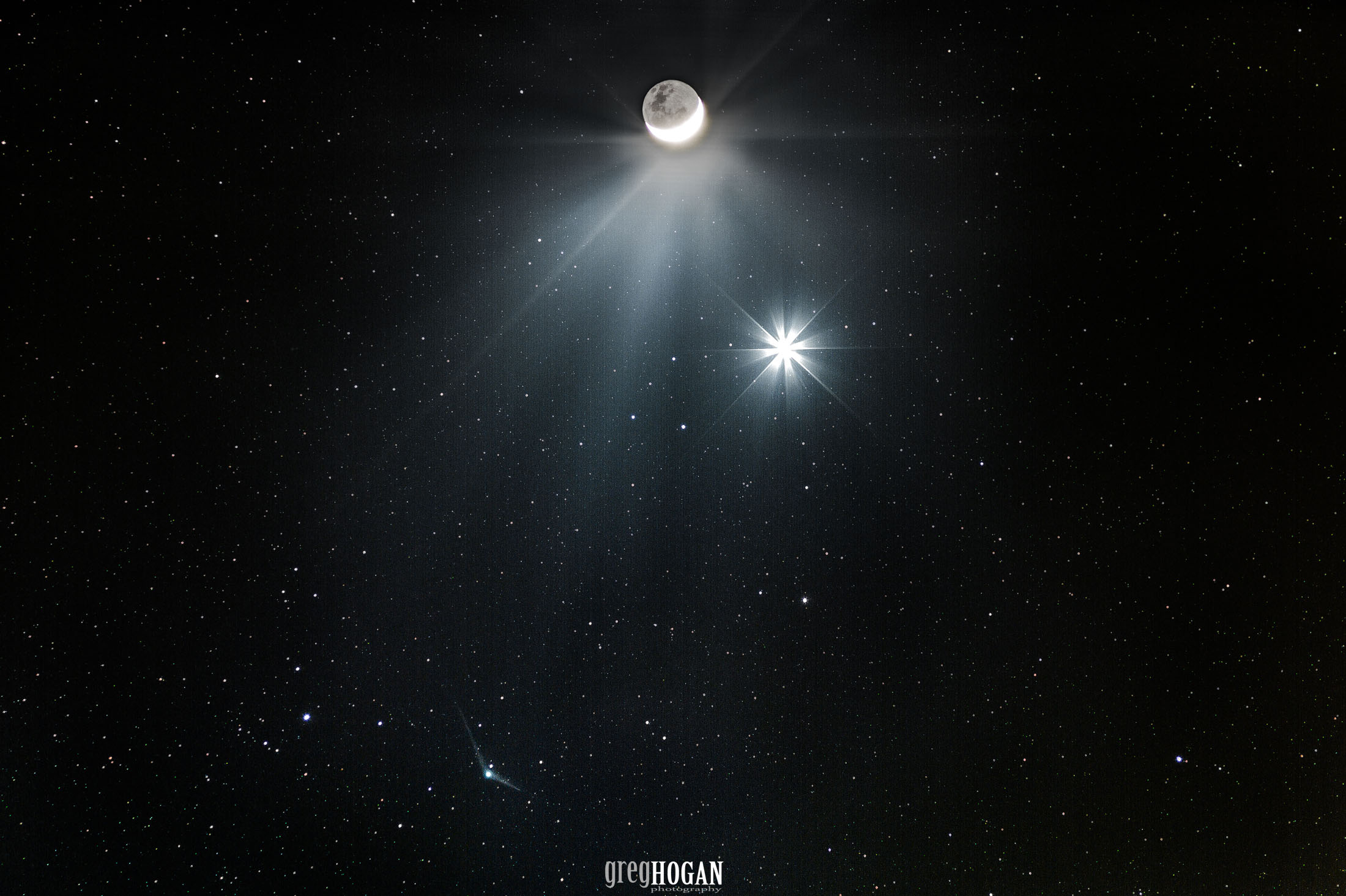
Astronomy picture of the day - 2015 December 12 - Comet Meets Moon and Morning Star
Image Credit & Copyright: Greg Hogan
Explanation: A crescent Moon and brilliant Venus met in predawn skies on December 7, a beautiful conjunction of planet Earth's two brightest celestial beacons after the Sun. Harder to see but also on the scene was Comet Catalina (C/2013 US10). The fainter comet clearly sporting two tails, lunar night side, bright sunlit lunar crescent, and brilliant morning star, are all recorded here by combining short and long exposures of the same field of view. Pointing down and right, Catalina's dust tail tends to trail behind the comet's orbit. Its ion tail, angled toward the top left of the frame, is blowing away from the Sun. Discovered in 2013, the new visitor from the Oort cloud was closest to the Sun on November 15 and is now outbound, headed for its closest approach to Earth in mid-January.
2015-12-11
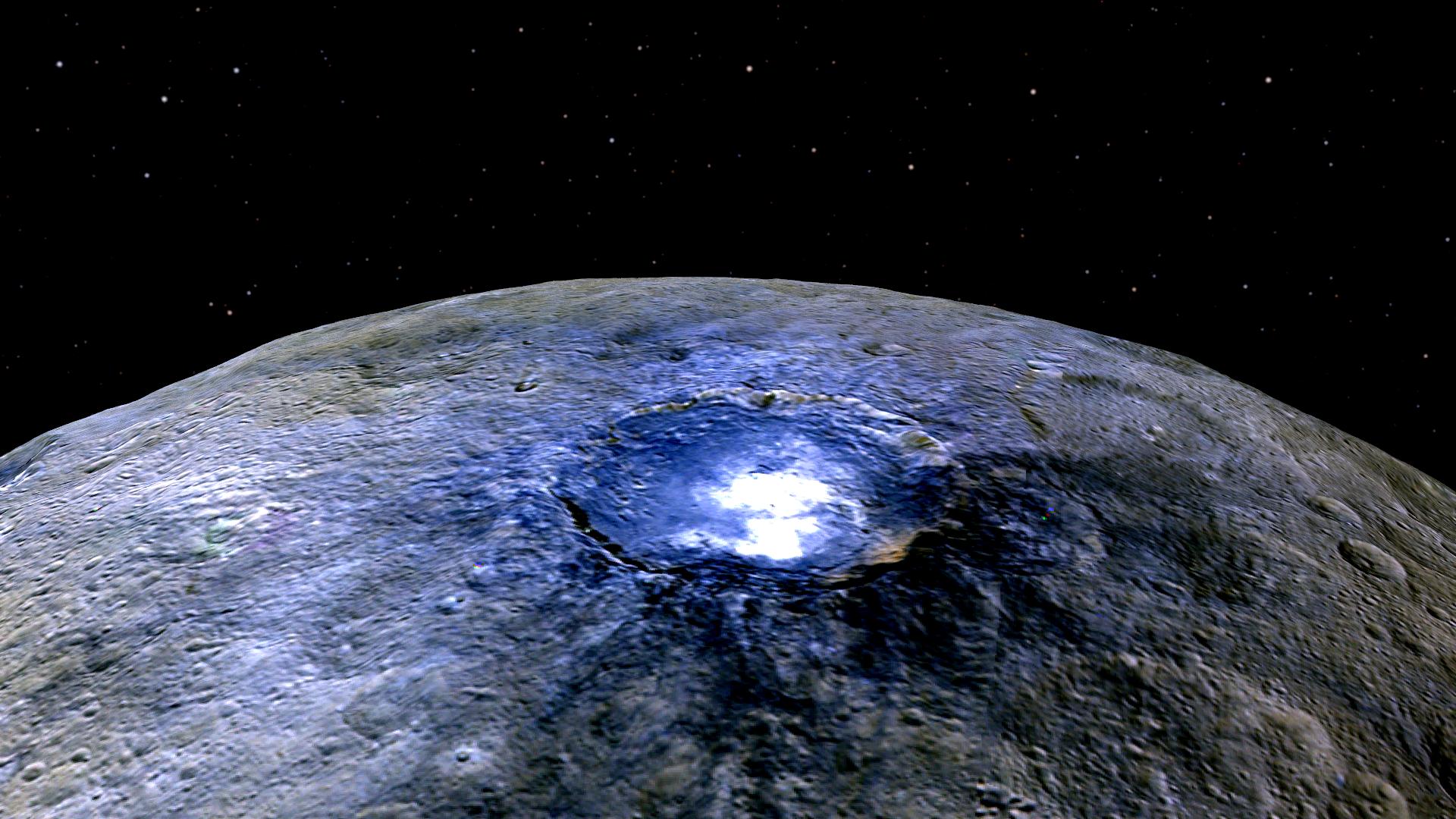
Astronomy picture of the day - 11-12-2015 - The Brightest Spot on Ceres
Image Credit: NASA, JPL-Caltech, UCLA, MPS/DLR/IDA
Explanation: Dwarf planet Ceres is the largest object in the Solar System's main asteroid belt with a diameter of about 950 kilometers. Exploring Ceres from orbit since March, the Dawn spacecraft's camera has revealed about 130 or so mysterious bright spots, mostly associated with impact craters scattered around the small world's otherwise dark surface. The brightest one is near the center of the 90 kilometer wide Occator Crater, seen in this dramatic false color view combining near-infrared and visible light image data. A study now finds the bright spot's reflected light properties are probably most consistent with a type of magnesium sulfate called hexahydrite. Of course, magnesium sulfate is also known to Earth dwellers as epsom salt. Haze reported inside Occator also suggests the salty material could be left over as a mix of salt and water-ice sublimates on the surface. Since impacts would have exposed the material, Ceres' numerous and widely scattered bright spots may indicate the presence of a subsurface shell of ice-salt mix. In mid-December, Dawn will begin taking observations from its closest Ceres mapping orbit.
Inscription à :
Commentaires (Atom)