2016-06-01

Sting - "Fragile" - Video - Music

Afficher l'image d'origine
"Fragile"

Astronomy picture of the day - 2016 June 1 - Tycho's Supernova Remnant Expands


Résultat de recherche d'images pour "tycho's supernova"

Tycho's Supernova Remnant Expands 
Video Credit: NASACXCGSFCB. Williams et al.
Explanation: What star created this huge expanding puffball? Featured here is the first expansion movie ever created for Tycho's supernova remnant, the result of a stellar explosion first recorded over 400 years ago by the famous astronomer Tycho Brahe. The 2-second video is a time-lapse composite of X-ray images taken by the orbiting Chandra X-ray Observatory between the years 2000 and 2015, added to a stock optical frame. The expanding gas cloudis extremely hot, while slightly different expansion speeds have given the cloud a puffy appearance. Although the star that created SN 1572, is likely completely gone, a star dubbed Tycho G, too dim to be discerned here, is thought to be a companion. Finding progenitor remnants of Tycho's supernova is particularly important because the supernova is of Type Ia, an important rung in the distance ladder that calibrates the scale of the visible universe. The peak brightness of Type Ia supernovas is thought to be well understood, making them quite valuable in exploring the relationship between faintness and farness in the distant universe.

2016-05-31

Astronomy picture of the day - 2016 May 31 - Stars and Gas of the Running Chicken Nebula

See Explanation.  Clicking on the picture will download
 the highest resolution version available.
Stars and Gas of the Running Chicken Nebula 
Image Credit & Copyright: Andrew Campbell
Explanation: To some, it looks like a giant chicken running across the sky. To others, it looks like a gaseous nebula where star formation takes place. Cataloged as IC 2944, the Running Chicken Nebula spans about 100 light years and lies about 6,000 light years away toward the constellation of the Centaur (Centaurus). The featured image, shown in scientifically assigned colors, was captured recently in an 11-hour exposure from a backyard near Melbourne,Australia. Two star clusters are visible: the Pearl Cluster seen on the far left, and Collinder 249 embedded in the nebula's glowing gas. Although difficult to discern here, several dark molecular clouds with distinct shapes can be found inside the nebula.

2016-05-30

Playing For Change - "Turnaround arts" - Video - Music - Around

Afficher l'image d'origine
"Turnaround arts"

Astronomy picture of the day - 2016 May 30 - Galaxy Evolution Tracking Animation

Galaxy Evolution Tracking Animation 
Video Credit: Donna Cox (AVL NCSA/U. Illinoiset al.NASA's GSFCAVLNCSA
Explanation: How did the universe evolve from such a smooth beginning? To help understand, computational cosmologists and NASA produced the featured time-lapse animated video depicting a computer simulation of part of the universe. The 100-million light-year simulation starts about 20 million years after the Big Bang and runs until the present. After a smooth beginning, gravity causes clumps of matter to form into galaxies which immediately begin falling toward each other. Soon, many of them condense into long filaments while others violently merge into a huge and hot cluster of galaxies. Investigating of potential universe attributes in simulations like this have helped shape the engineering design the James Webb Space Telescope, currently scheduled for launch in late 2018.

2016-05-29

TEXTO - Amigos

Não sei porquê mas, constantemente velhos e saudosos amigos me vêm à memoria: é caso do Manuel da Silva que comigo colaborava, com a sua voz radiofonicamente excelente em programas proibidos…Estavamos em 1983, infringíamos a lei sem medo nem agravo, e depois da hora “de antena”, bebíamos um copo, dois, três… Perdão, não me lembro bem…

O Manuel tinha uma rubrica sui-generis: era dele a pagina do desporto que os ouvintes ansiavam ouvir, esperando até ao fim…

Tinha uma voz de locutor dos anos sessenta muito parecida com a do Nuno Braz. Foi um dos esteios do nosso “programa”… Depois outros vieram com boa vontade mas jamais o igualaram.

A Amália Rodrigues teve uma intervenção fantástica quando, no dia 9 de março de 1986 respondeu ao cônsul sovina, que queria espectáculo com duas garrafas de champanhe para cerca de vinte pessoas, já há muito nada havendo nas taças: “Eu gostava de brindar, senhor cônsul-geral, mas olhando para as taças, verifico que ja  não há saude…

Foi companheiro da Amália o meu querido Amigo Fernando Pereira. Quando se encontraram naquele dia fiquei a saber que me não tinham mentido! Aquele abraço, aquela emoção partilhada…

Termino, enfim e desta vez, com o Adelino Pereira. Passamos noites a sonhar, a idealizar o Brasil ouvindo musicas tão lindas do Roberto Carlos… Não, não perdemos tempo porque o que imaginamos é verdade.

Vi Lino… O que pensaste é verdade. Estive la e pensei sempre em ti.

29-05-2016

JoanMira         

Portel - "Eu ouvi o passarinho" - Video - Musica - Ao vivo

"Eu ouvi o passarinho"

Paisagem Natural/Paisagem Alentejana.

Grupo Coral e Etnografico de Pias - & Sociedades Filarmonicas de Serpa e Silves - "La vai Serpa la vai Moura" - Video - Musica - Ao vivo

Cores do Alentejo, Portugal - Ourique, Beja
"La vai Serpa la vai Moura"

Grupo Musical Raizes do Alentejo - "Vamos ao rio Guadiana" - Slides - Musica

"Vamos ao rio Guadiana"

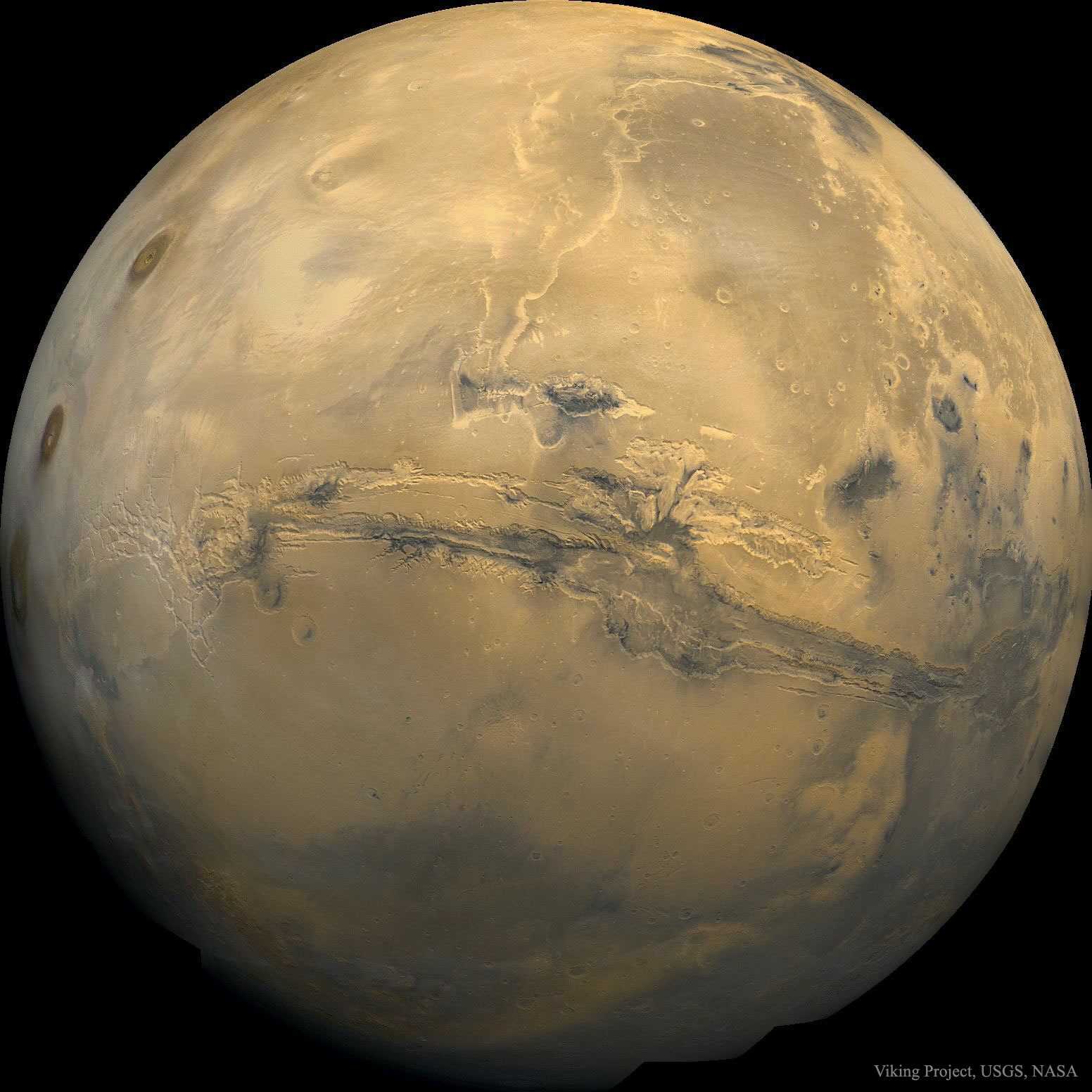
Astronomy picture of the day - 2016 May 29 - Valles Marineris: The Grand Canyon of Mars

See Explanation.  Clicking on the picture will download
 the highest resolution version available.
Valles Marineris: The Grand Canyon of Mars 
Image Credit: Viking ProjectUSGSNASA
Explanation: Mars will look good in Earth's skies over the next few days -- but not this good. To get a view this amazing, a spacecraft had to actually visit the red planet. Running across the image center, though, is one the largest canyons in the Solar System. Named Valles Marineris, the grand valley extends over 3,000 kilometers long, spans as much as 600 kilometers across, and delves as much as 8 kilometers deep. By comparison, the Earth's Grand Canyon in Arizona, USA is 800 kilometers long, 30 kilometers across, and 1.8 kilometers deep. The origin of the Valles Marineris remains unknown, although a leading hypothesis holds that it started as a crack billions of years ago as the planet cooled. Several geologic processes have been identified in the canyon. The featured mosaic was created from over 100 images of Mars taken by Viking Orbiters in the 1970s. Tomorrow, Mars and Earth will pass the closestin 11 years, resulting in the red planet being quite noticeable toward the southeast after sunset.