2016-05-19

Policia - Agressões inadmissiveis a simpatizantes do Sporting! (video)

VIOLÊNCIA. Carga policial foi filmada por câmara de videovigilância do estádio de Alvalade no domingo, após a receção à equipa do Sporting. Claque divulgou as imagens no Youtube
Clube fez uma exposição à PSP condenando as “agressões bárbaras” cometidas durante a carga policial que ocorreu domingo à noite junto à sede da claque Juve Leo, no estádio de Alvalade. A PSP está já a investigar o caso.

Há um muro de silêncio em torno da carga policial ocorrida na noite do último domingo sobre adeptos da Juve Leo, nas imediações do estádio José Alvalade. Na PSP, que abriu dois inquéritos ao caso, ninguém quer falar. Já o Sporting, que classifica de “bárbaras” as agressões cometidas pelos agentes a elementos da claque, exige “punições” aos responsáveis.

A carga policial, realizada após a receção à equipa, depois do jogo em Braga, foi filmada pelas câmaras de videovigilância do estádio e disponibilizada no YouTube pela claque sportinguista. O vídeo, com a duração de 7m58s, mostra vários agentes da PSP a bater com cassetetes em adeptos da Juve Leo, em alguns casos com estes já imobilizados no chão.


Expresso - Portugal

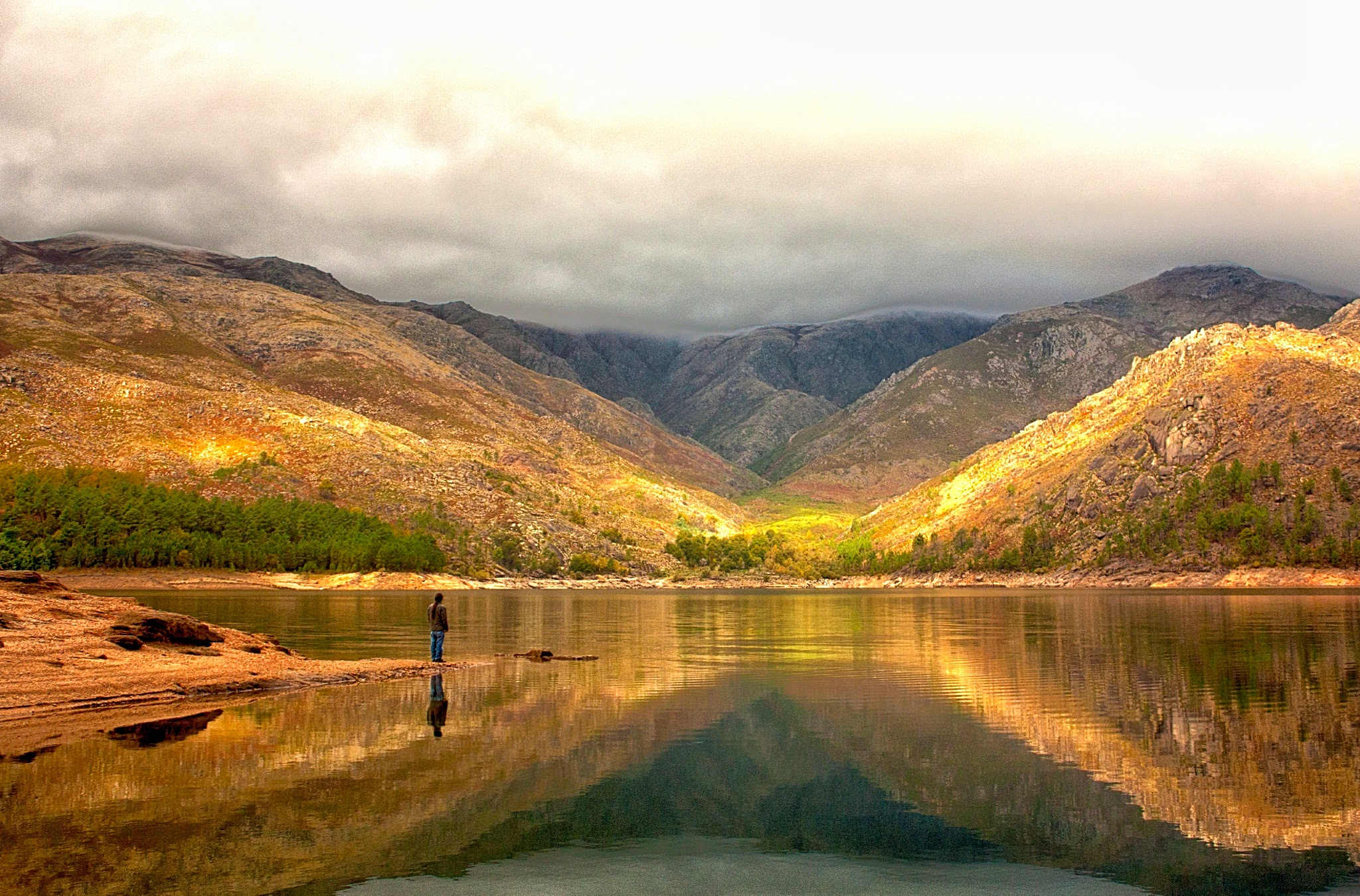
Imagens - Paisagens de Portugal - Parque Nacional da Peneda - Gerês

Parque Nacional da Peneda - Gerês

Queda de avião da Egyptair com 66 pessoas a bordo

O voo que fazia a ligação Paris - Cairo desapareceu durante a madrugada. Aviação civil egípcia acredita que terá caído ao mar.
A transportadora aérea Egyptair anunciou esta quinta-feira que um dos seus voos de Paris para o Cairo desapareceu dos radares durante a madrugada, com 56 passageiros e 10 membros da tripulação a bordo - incluindo um passageiro português.
O último contacto com o voo MS804 foi às 2.45 locais (1.45 em Lisboa) pouco depois de este ter entrado no espaço aéreo egípcio sobre o Mediterrâneo, 280 km a norte da costa do Egito.
Equipas de busca e resgate foram mobilizadas para procurar o avião, em coordenação com as autoridades gregas. Peritos da aviação civil egípcia informaram a agência Reuters de que acreditam que o avião caiu no Mediterrâneo e a agência noticiosa Agence France Presse escreve, citando fonte aeroportuária, que o avião se despenhou perto da ilha grega de Cárpatos.
A bordo seguiam pessoas de 12 nacionalidades, incluindo um passageiro português, segundo informou a companhia aérea. O governo português já confirmou que existia uma pessoa de nacionalidade portuguesa a bordo do avião, sem dar mais informações. Trinta dos passageiros e tripulantes eram egípcios e 15 eram franceses. Havia três crianças a bordo, cujas nacionalidades não foram especificadas.
Diario de Noticias - Portugal

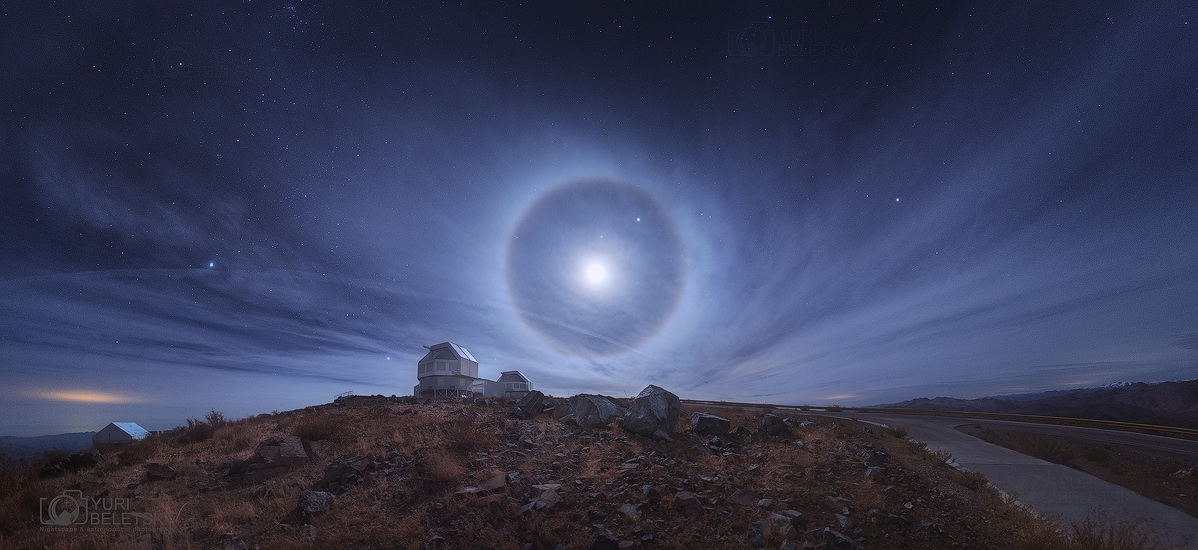
Astronomy picture of the day - 2016 May 18 - Halo from Atacama

See Explanation.  Clicking on the picture will download
 the highest resolution version available.
Halo from Atacama 
Image Credit & Copyright: Yuri Beletsky (Carnegie Las Campanas ObservatoryTWAN)
Explanation: Influenced by the strong Pacific El Nino, cloudy skies have more often come to Chile's high Atacama Desert this season, despite its reputation as an astronomer's paradise. Located in one of the driest, darkest places on planet Earth, domes of the region's twin 6.5 meter Magellan telescopes of Carnegie Las Campanas Observatory were closed on May 13. Still, a first quarter Moon and bright stars shine through in this panoramic night skyscape, the lunar disk surrounded by a beautiful, bright halo. The angular radius of the halo is 22 degrees. Not determined by the brightness or phase of the Moon itself, the angle is set by the hexagonal geometry of atmospheric ice crystals that reflect and refract the moonlight. On that night, the brilliant star just inside the halo's radius was really planet Jupiter. The brightest star flanking the halo to the far left is Canopus, with Arcturus on the halo's right.

2016-05-17

Astronomy picture of the day - 2016 May 17 - The Orion Nebula in Visible and Infrared

See Explanation.  Clicking on the picture will download
 the highest resolution version available.
The Orion Nebula in Visible and Infrared 
Image Credit & Copyright: Infrared: NASASpitzer Space Telescope; Visible: Oliver CzernetzSiding Spring Obs.
Explanation: The Great Nebula in Orion is a colorful place. Visible to the unaided eye, it appears as a small fuzzy patch in the constellation of Orion. Long exposure, multi-wavelength images like this, however, show the Orion Nebulato be a busy neighborhood of young stars, hot gas, and dark dust. This digital composite features not only three colors of visible light but four colors of infrared light taken by NASA's orbiting Spitzer Space Telescope as well. The power behind much of the Orion Nebula (M42) is the Trapezium - four of the brightest stars in the nebula. Many of the filamentary structures visible are actually shock waves - fronts where fast moving material encounters slow moving gas. The Orion Nebula spans about 40 light years and is located about 1500 light years away in the same spiral arm of our Galaxy as the Sun.

2016-05-16

Fotos - "Primaveril" - 16-05-2016

"Primaveril"

16-05-2016
JoanMira

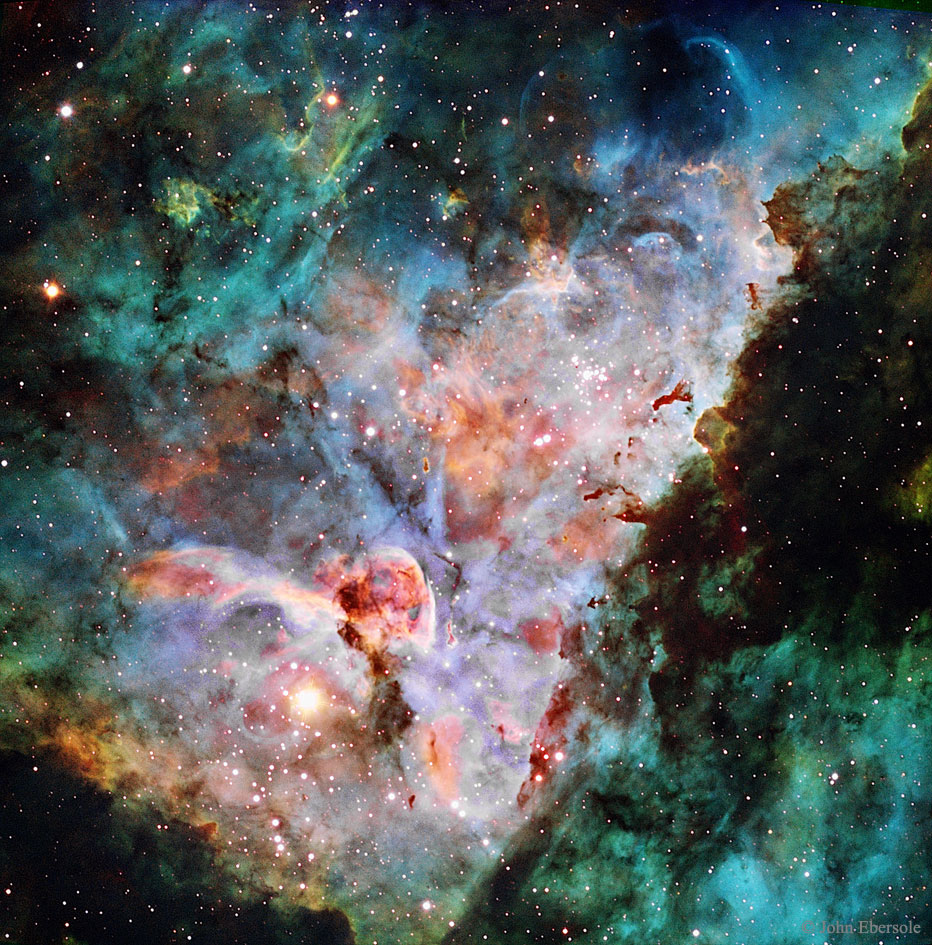
Astronomy picture of the day - 2016 May 16 - Clouds of the Carina Nebula

See Explanation.  Clicking on the picture will download
 the highest resolution version available.
Clouds of the Carina Nebula 
Image Credit & Copyright: John Ebersole
Explanation: What forms lurk in the mists of the Carina Nebula? The dark ominous figures are actually molecular clouds, knots of molecular gas and dust so thick they have become opaque. In comparison, however, these clouds are typically much less dense than Earth's atmosphere. Featured here is a detailed image of the core of the Carina Nebula, a part where both dark and colorful clouds of gas and dust are particularly prominent. The image was captured last month from Siding Spring Observatory in Australia. Although the nebula is predominantly composed of hydrogen gas -- here colored green, the image was assigned colors so that light emitted by trace amounts of sulfur and oxygenappear red and blue, respectively. The entire Carina Nebula, cataloged as NGC 3372, spans over 300 light years and lies about 7,500 light-years away in the constellation of Carina. Eta Carinae, the most energetic star in the nebula, was one of the brightest stars in the sky in the 1830s, but then faded dramatically.

2016-05-15

A aguia voa mais alto. Benfica tri-campeão nacional!


Sport Lisboa e Benfica - benfica, lisbon, sport, portugal, slb


A festa estava preparada, mas podia não haver festa. O Benfica dependia apenas de si, só que tinha de trabalhar para celebrar, porque o Sporting iria fazer o mesmo no Minho. Mas os “encarnados” fizeram mais do que o suficiente para garantirem o seu 35.º título de campeão nacional, triunfando sobre o Nacional da Madeira na Luz por 4-1 na jornada que encerrou o campeonato. Trinta e nove anos depois, o Benfica voltou a ser tricampeão, na época de estreia de Rui Vitória no banco benfiquista.


Durante os 90 minutos, mais a compensação, o 35 só não esteve na Luz durante três minutos, entre os 20’ e os 23’. Foi o tempo que passou entre o golo de Teo Gutiérrez, em Braga, e o primeiro de Gaitán, na Luz. Nesses três minutos, a hierarquia do campeonato mudou, mas, assim que o argentino marcou o primeiro, a festa “encarnada” ganhou outra consistência e foi em crescendo, com o acumular de golos, até à explosão final.

O Nacional de Manuel Machado era o último obstáculo e até chegou a assustar aos 10’, com um remate perigoso de Agra ao lado, após boa jogada de Mauro. Mas o Benfica controlava o jogo com competência e sem nervos, disposto a resolver as coisas cedo. Aos 23’, a primeira explosão. Jonas deu o toque para Pizzi, que, face ao adiantamento de Gottardi, conseguiu meter a bola em Gaitán e o argentino, de ângulo difícil, fez o primeiro.


Antes do intervalo, foi Jonas a juntar mais um à sua conta, marcando aos 39’, após um excelente passe de Gaitán.

Alimentado pelo público entusiasta e pronto para a festa, o Benfica não desacelerou na segunda parte. Aos 65’, foi Gaitán a fazer o 3-0 em recarga a um primeiro cabeceamento de Mitroglou, após cruzamento de Jonas.

O título era irreversível e não haveria nenhum benfiquista que não tivesse um sorriso estampado no rosto. Até o fleumático Rui Vitória não continha as emoções e naqueles momentos só queria, por certo, que os minutos passassem depressa. Pizzi fez o 4-0 aos 84’ e Agra ainda fez um golo para o Nacional, batendo o recém-entrado Paulo Lopes, que também entrou para ser campeão. Pouca mossa para o que todos naquele estádio já sentiam.

Quando o árbitro Nuno Almeida apitou pela última vez, toda a gente gritou a uma só voz “tricampeões”. A faixa que estava preparada foi exibida numa das bancadas a dizer isso mesmo e a prometer uma sequela para a próxima época.


Publico - Portugal

Fotos - Passeando pelo Rio - "Estadio Maracanã" - 31-03-2012

"Estadio Maracanã"

Rio de Janeiro, 31-03-2012
JoanMira

Astronomy picture of the day - 2016 May 15 - Milky Way Over Quiver Tree Forest

See Explanation.  Clicking on the picture will download
 the highest resolution version available.
Milky Way Over Quiver Tree Forest 
Image Credit & Copyright: Florian Breuer
Explanation: In front of a famous background of stars and galaxies lies some of Earth's more unusual trees. Known as quiver trees, they are actually succulent aloe plants that can grow to tree-like proportions. The quiver tree name is derived from the historical usefulness of their hollowed branches as dart holders. Occurring primarily in southern Africa, the trees pictured in the above 16-exposure composite are in Quiver Tree Forest located in southern Namibia. Some of the tallest quiver trees in the park are estimated to be about 300 years old. Behind the trees is light from the small town of KeetmanshoopNamibia. Far in the distance, arching across the background, is the majestic central band of our Milky Way Galaxy. Even further in the distance, visible on the image left, are the Large and Small Magellanic Clouds, smaller satellite galaxies of the Milky Way that are prominent in the skies of Earth's southern hemisphere.